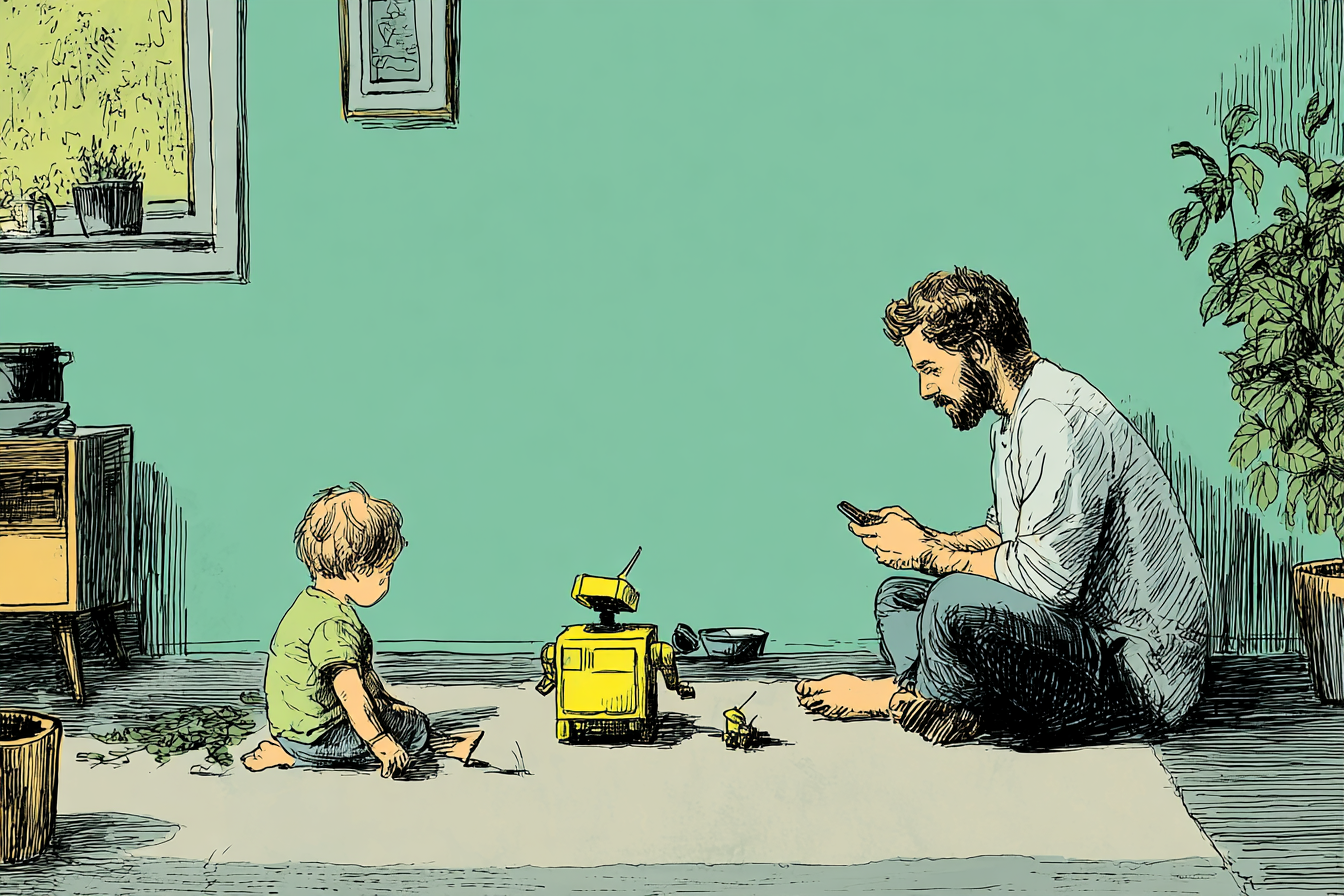
Parents ask whether AI is good or bad for kids. I think the more useful question is what AI is teaching before anyone thinks to call it teaching.
A 2026 BSM Media survey found that 66 percent of U.S. mothers had used AI tools to find product ideas or parenting tips. That number isn’t shocking. Mothers are tired, searching the web has become an exercise in wading through sludge, and a machine that makes the next decision a little easier is going to get used.
But a tool you use in front of a child becomes part of the environment, and environments teach.
Your child learns from you
Watch what gets absorbed. If a parent asks a machine every question, the child learns where answers come from. If the machine answers instantly, the child learns how long not-knowing is supposed to last. If the adult never checks the answer, the child learns that confidence is the same thing as being right. And if a chatbot behaves like a perfect friend – always available, never needing anything back – the child picks up a strange idea about people: that the best ones make no demands on you at all.
None of this requires a villain. It only requires defaults.
Software people, of all people, shouldn’t be surprised by this. Defaults are decisions. The path of least resistance was designed by someone, and if the product lives in your home, its defaults quietly become part of your home.
Put AI behind the parent
UNICEF’s 2026 interview with Harvard researcher Ying Xu holds up because it refuses to flatten the issue. AI can help children explore. It can also crowd out sleep, schoolwork, friendship, and productive struggle.
Productive struggle is the part adults are most tempted to optimize away. A child asks a question, the machine can answer it, and the well-meaning parent can make the friction vanish in a second. But the friction is usually where the lesson lives – the child guessing first, trying the wrong category, sounding out the word, getting annoyed, glancing at your face, and trying again. None of that is wasted motion; it’s the lesson itself.
This is where AI tools for young kids need a colder design rule: help the adult, don’t hand the kid the answer. The broader AI tutoring debate keeps circling the same point. AI is great at spotting patterns, suggesting lessons and materials, or turning your kid’s current obsession into an educational game. It can even nudge the parent to consider that the blocker might be hunger rather than phonics. What it shouldn’t be is the thing standing between the child and the struggle. The parent is still the better teacher.
Use a protocol, not vibes
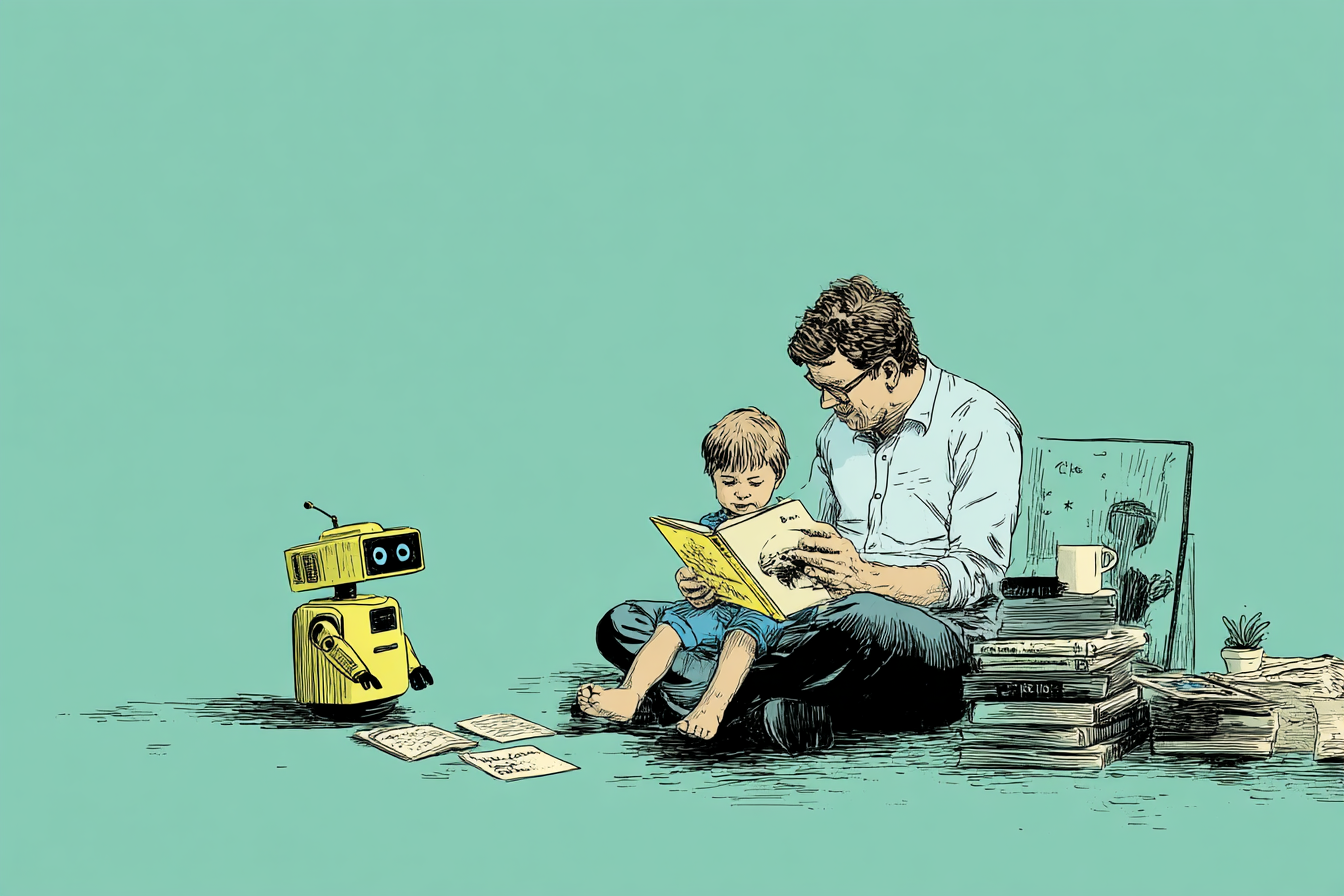
In Early Childhood Matters , Daanish Masood describes building an AI model for bedtime stories with his four-year-old son, drawing on texts that matter to his family – Rumi, the Tao Te Ching.
The custom model is the flashy part. The protocol is the useful part. He uses it with his son. He checks the sources. He treats the machine as fallible, and his son, who calls it “robot,” corrects it when it wanders off. That isn’t outsourcing the relationship – it’s a parent using a tool in the child’s presence while keeping the relationship whole.
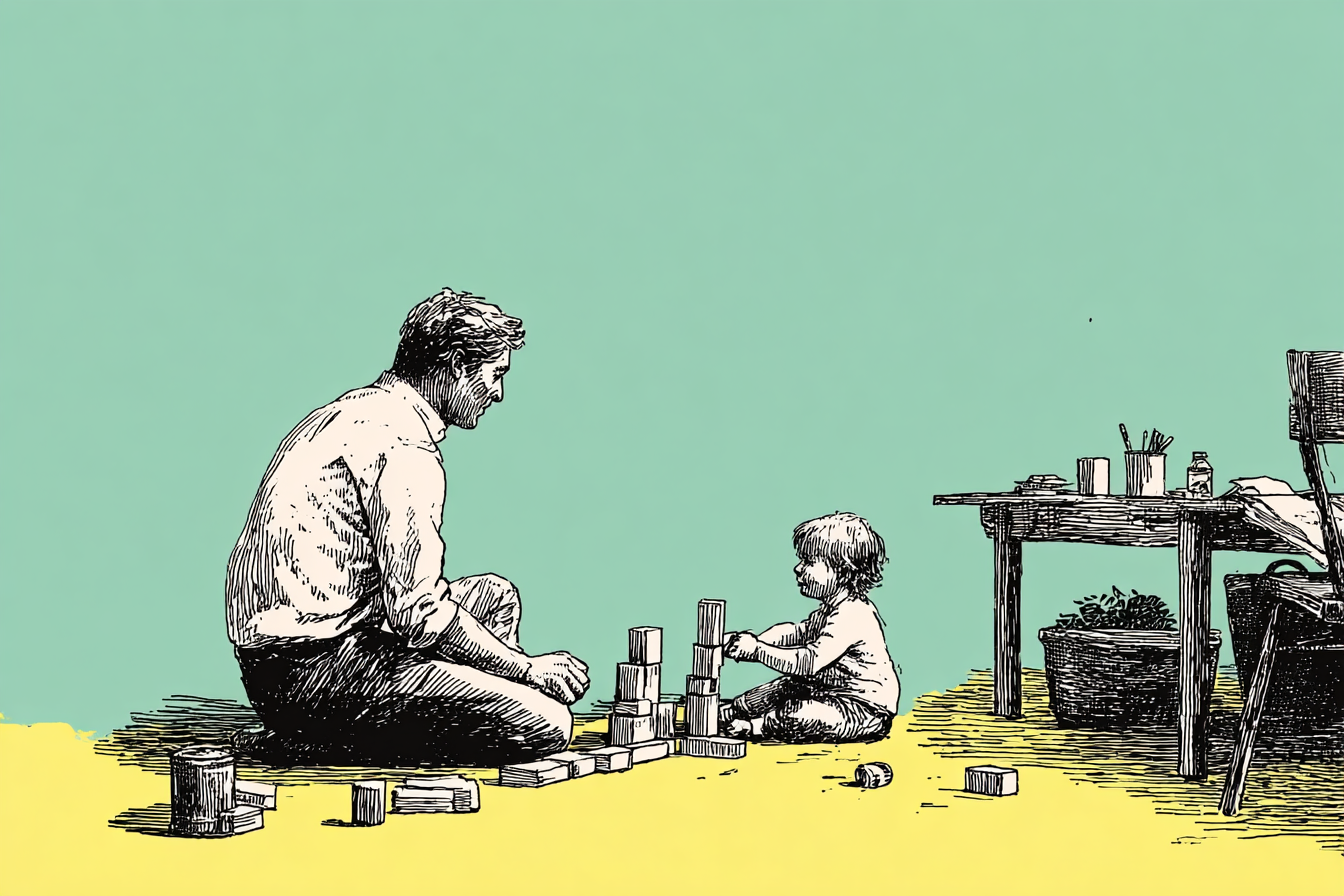
You can do the same without training anything. Ask the child first. Use the tool together. Say out loud when the machine might be wrong. And make the answer point back to something real – a book, a block tower, a drawing, a walk, an object you can hold. The screen should open a door into the room, not stand in for the room.
Edit the syllabus
There’s an invisible curriculum running in every home – the slow accumulation of small lessons a child absorbs from the world around them. How fast answers arrive. Who gets trusted. Whether adults bother to verify a claim. Whether hard thinking gets preserved or quietly paved over. Whether the technology serves the family, or the family slowly rearranges itself around the technology.
I want a kid who knows what job a tool has, what job it doesn’t, and when the human is still the one responsible. The machine won’t put itself in its place. That part is the parent’s job.
The cleanest override is a real activity in the room. I wrote a twelve-week project curriculum for ages 2-6 – hands-on building, no screens required, designed so the parent stays the teacher and the tool stays the tool. It’s the syllabus for the part of the day you don’t want the defaults to write.