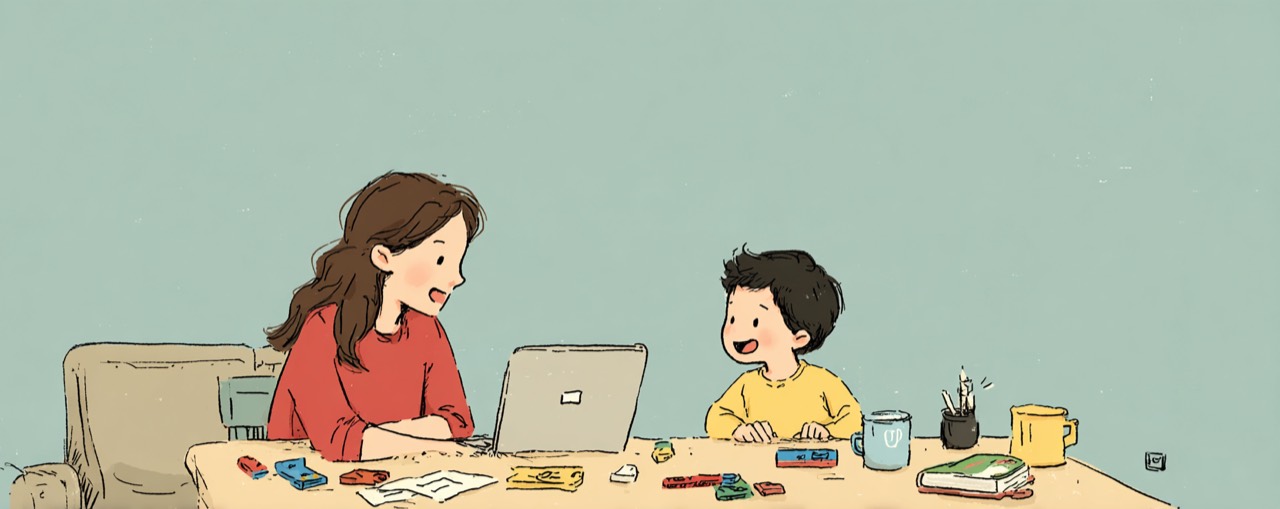
My son was two and a half when he built his first browser game.
He couldn’t read. He couldn’t type. But he could sit next to me and say, “Make a red car game! Make it jump!”
So I typed his words into an AI coding tool. A red car appeared. He pressed the space bar. It jumped.
His face did the thing — that wide-open, whole-body joy kids have before the world teaches them to play it cool. Then: “Make it go faster. Can we make it a digger?”
He was designing. He was iterating. He was two.
I’ve spent twelve years building software and I have a master’s in CS, and the most useful thing I’ve ever taught my kid about technology never once touched a screen. It was a sequence. First this, then that, then done. That’s the thinking underneath all of it — the part that stays useful when the languages stop being.
Nobody tells dev parents this, so I will: there’s no reason to wait. The wiring for sequential reasoning, pattern recognition, and conditional logic is going in right now, between ages two and six. Your kid is already doing this work when they sort toys by color or figure out that pushing the button makes the sound. They just don’t have anyone yet to point at it and name it.
So I wrote the curriculum I couldn’t find
I went looking for hands-on activities. AI-assisted game building where the kid directs and the parent types. Real CS concepts. Something a tired parent could follow with no prep on a Tuesday night.
It didn’t exist. So I built it.
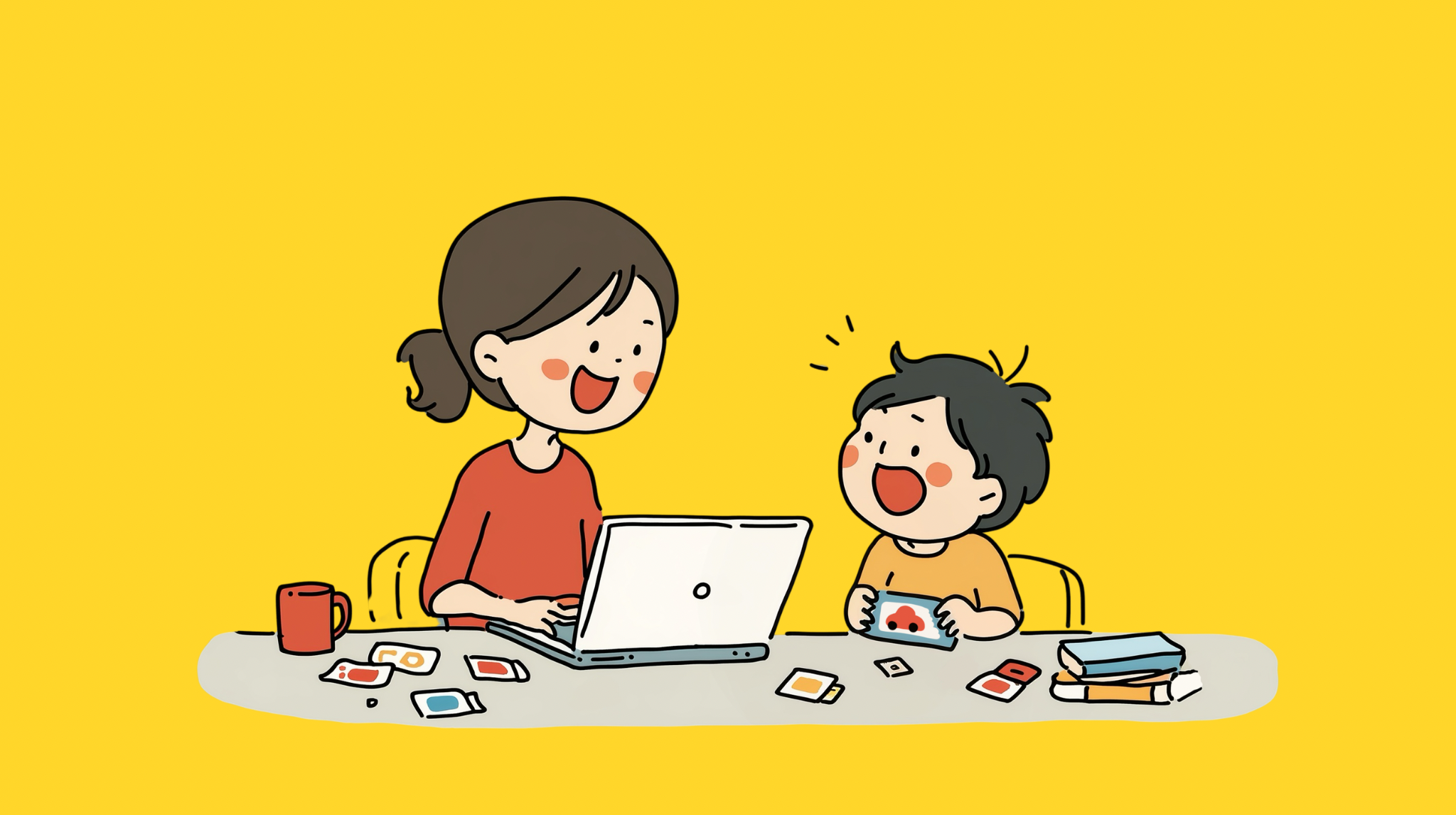
12 Weeks of Tech Projects to Build With Your Kid – computational thinking for ages 2-6.
Each week takes one concept (sequences → patterns → loops → conditionals → debugging, all the way to putting them together) and runs it through the same simple rhythm:
- Mon-Tue: Hands-on, no screens. Sorting games, pattern hunts, domino chain reactions.
- Wed: Build a browser game with AI. Kid describes, you type.
- Thu: Remix day. Kid changes the game – new colors, new rules, harder levels.
- Fri: Kid “teaches” the concept to a stuffed animal. If they can explain it, they own it.
Every bit of it was tried and tested on my actual 3-year-old – the one who earned the nickname “Mr Wiggles” at a year old and would, given any choice in the matter, rather hurl paper airplanes or play excavators or race cars than sit still for a single minute. If an activity survived his attention span, it made the cut. Plenty didn’t.
The part that does the heavy lifting is the AI game building, because it removes the thing that used to keep little kids out: the typing. Your kid describes a game in plain words, watches it appear, then starts asking for changes. The feedback loop is immediate. They’re the product manager, the designer, and the QA team all at once.
You’re just the typist.
I’m not doing this to raise the next Zuckerberg. I’m doing it because my kid’s brain is, right now, built to absorb the exact thinking framework I use every working day, and it seems a waste to let that window pass.
The book: 12 Weeks of Tech Projects to Build With Your Kid – $29 on Gumroad. A PDF you can mark up and reprint.
I also made a pile of companion products because, apparently, this is who I am now:
- 41-Prompt AI Pack ($17) – Copy-paste prompts for ChatGPT/Claude, each with a [CHILD’S INTEREST] placeholder. Three per concept: a story prompt, a hands-on activity prompt, and a browser game prompt. Swap in “monster trucks” or “butterflies” and go.
- Screen Time Conversation Cards ($0+) – 10 screen-free discussion prompts you can use anywhere. Car, bath, dinner. No materials needed.
- Unplugged Expansion Pack ($12) – 12 additional screen-free activities (one per concept), all household items.
- “What Are They Learning?” Cheat Sheet ($5) – Quick reference for each concept.
- Complete Toolkit Bundle ($39) – Everything above plus bonus activity cards. Save $24.
Browse everything at shop.raisingpixels.dev
No coding required. No CS degree required. (I have one. I promise you don’t need it.)
The short version: screen time they made beats screen time they watched, every time.
If you know a parent who’d perk up at “computational thinking for toddlers,” send them this.
– Diana