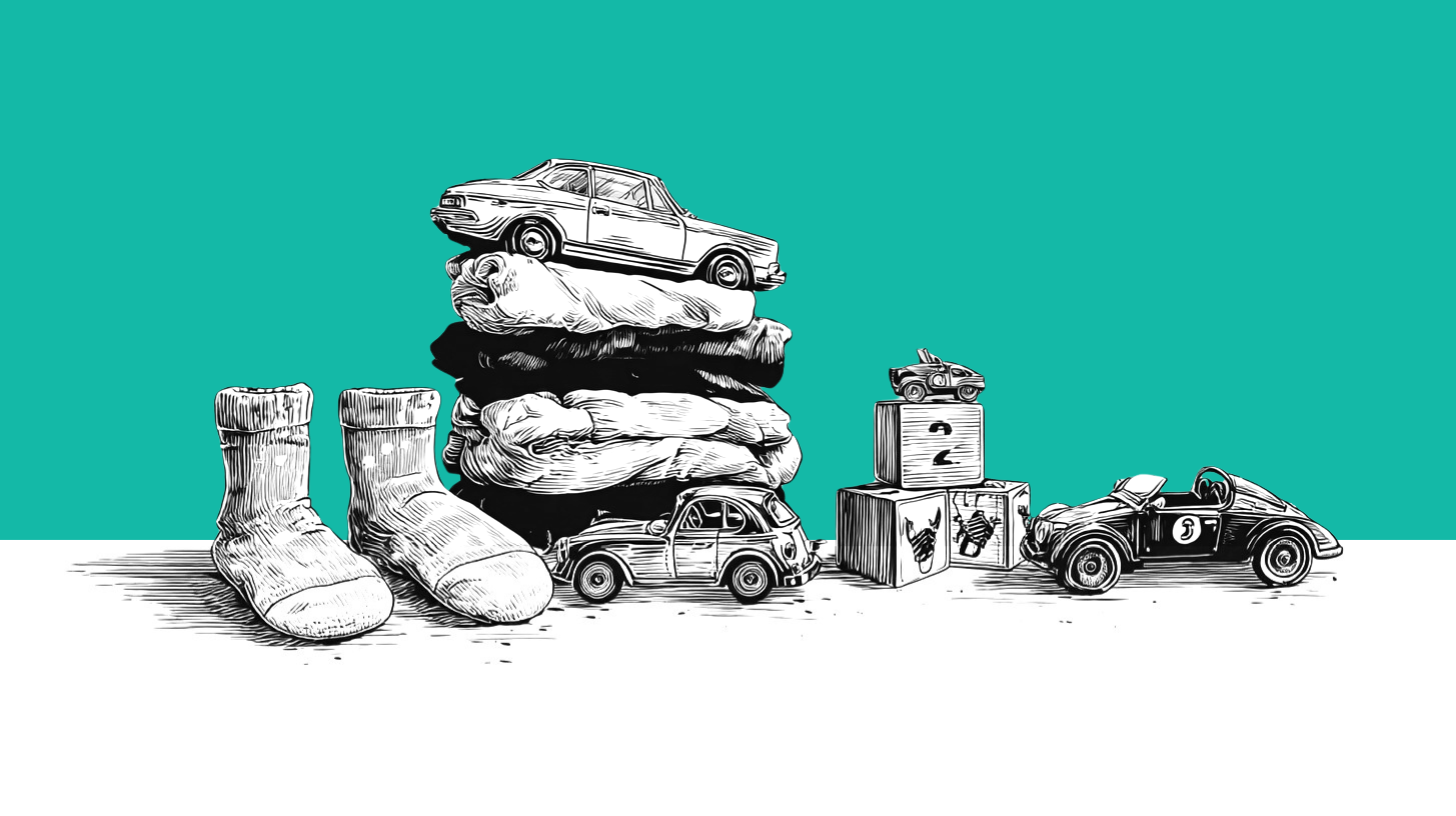
“Big block. Small block. Big block. What comes next?”
“Build a tower,” he says.
My toddler is more interested in stacking them than lining them up, so I switch axis. “Big block, small block, big block…”
“I’m going to knock it over!” he announces.
“Okay, but first tell me if a big block or a small block comes next.”
“Small block,” he says, and uses a small block to knock over the tower.
I’ll take it.
Tricking Toddlers into Learning Programming Fundamentals
1. The Sock Sorting Algorithm
Post-laundry, dump all the socks on the floor. “Find all the truck socks!” He groups them. “Now find their friends!” He matches the pairs. Classification and matching, two core programming concepts, smuggled in under cover of helping with chores.
2. Red Light, Green Light 2.0
Classic game, programmer twist. Green = walk, red = stop. Then we add a wrinkle: “When I clap AND say green, you clap and walk!” Conditional logic, the cheerful way. Next: “Two claps means go backwards!” Now we’ve got parameters.
3. The Toy Car Parking Lot
Line up the cars by size. Now by color. Now red cars in front, everything else behind. He’s running sorting algorithms with no idea that’s what they’re called. Add a rule – “emergency vehicles always go first!” – and you’ve quietly introduced a priority queue.
4. Snack Patterns
Goldfish, pretzel, goldfish, pretzel. “Can you keep the pattern going?” Once he’s got it: “What if we add a raisin?” Now it’s goldfish, pretzel, raisin, goldfish, pretzel, raisin – pattern expansion, though the raisins rarely survive more than a couple of iterations.
Why This Actually Matters
These aren’t cute games that loosely gesture at programming. They drill the exact thinking patterns he’ll use whether he’s prompting an AI or (less likely) writing real code someday:
- Pattern recognition: the basis of all debugging
- Sequential thinking: how programs execute
- Conditional logic: if this, then that
- Classification: grouping similar things
- Algorithm design: the steps to solve a problem
Your Turn
Talk out loud about any pattern you spot. Cars parked along the street. Tree, bush, tree, bush down the sidewalk.
Give your kid the chance to match: “Can you put this fork in the drawer with the other forks?”
Tonight at dinner, make a pattern out of the food and ask your kid to describe it. The yummier, the better.
What pattern games do you play? Reply and tell me – I’m always hunting for new ways to sneak programming logic into playtime.